
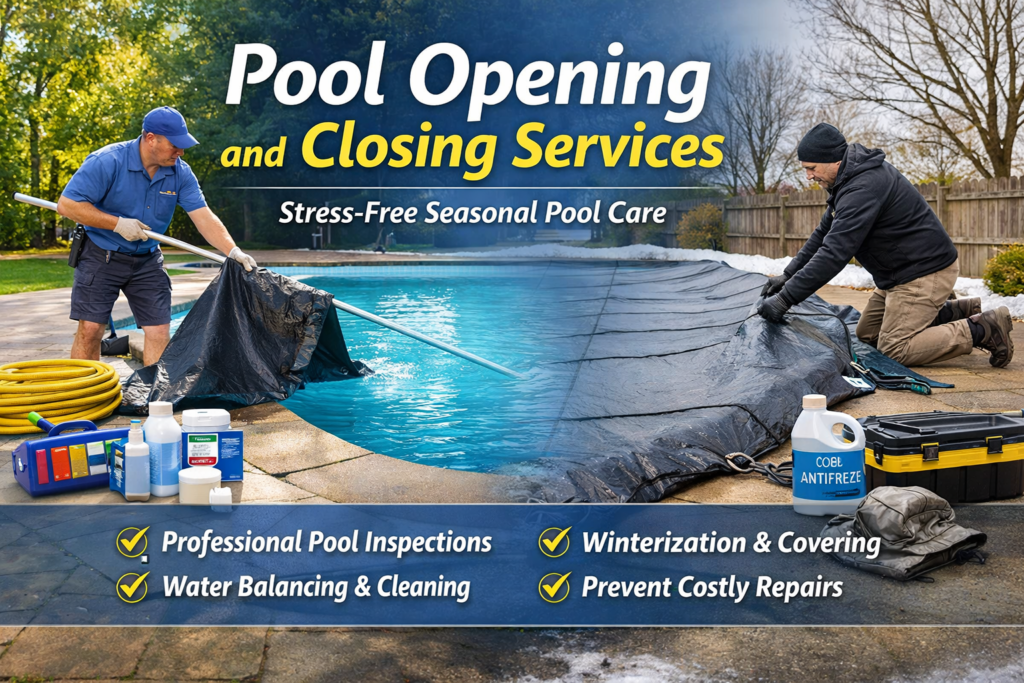
Owning a pool is one of the best ways to enjoy your backyard during warm weather. But keeping it safe, clean, and fully functional year-round takes proper seasonal care. The two most critical times for pool maintenance are spring openings and fall closings.
Many homeowners in Nassau County, Long Island, and across the U.S. underestimate how much preparation is needed. Failing to follow proper steps can lead to cloudy water, algae growth, equipment damage, and costly repairs. By preparing your pool carefully, you ensure it’s ready for summer fun and winter protection, while saving time, money, and stress.
This guide will break down common problems, step-by-step solutions, and professional tips so that your pool stays safe, clean, and enjoyable all year.
Why Professional Pool Openings Make a Difference
Problems with DIY Spring Openings
Opening a pool for summer might seem simple, but DIY approaches often cause problems. Common issues include:
- Broken pumps or filters from not checking winter damage
- Cloudy or green water caused by unbalanced chemicals
- Debris damage to liners or pool surfaces
- Leaks in plumbing that are only noticeable once the pool is filled
Skipping professional care may lead to extra trips to pool supply stores, wasted chemicals, and lost swim days during peak season.
How Professionals Ensure a Smooth Opening
Professional pool openings follow a systematic approach:
- Remove covers carefully – Leaves, twigs, and standing water should be removed to prevent scratches or liner tears.
- Inspect pool equipment – Pumps, heaters, filters, and valves are checked for wear or winter damage.
- Refill and balance water – Adjusting pH, alkalinity, calcium hardness, and chlorine levels ensures safe swimming water.
- Shock the pool – Adding a strong chlorine dose kills bacteria, algae, and other contaminants.
- Test for leaks or cracks – Detecting early problems prevents major repairs later.
- Professional cleaning and vacuuming – Removes sediment and debris that may have settled over winter.
Following these steps ensures your pool water stays crystal clear, equipment works efficiently, and your summer season starts stress-free.
Common Pool Problems During Season Changes
Algae Growth and Water Imbalance
One of the biggest challenges during spring openings is algae and water imbalance. Warm temperatures and sunlight encourage algae growth, especially if the pool wasn’t closed properly.
Solution: Use professional water testing kits or hire a pool technician to measure chemical levels. Adding algaecides, chlorine stabilizers, and shock treatments helps prevent algae before it spreads.
Equipment Damage from Weather
Winter temperatures can damage pool pumps, filters, heaters, and pipes, especially if water remains in the system. Frozen or cracked equipment can be costly to replace.
Solution: Proper fall winterization includes draining water from pumps, heaters, and pipes, and adding pool-safe antifreeze to exposed plumbing. Covering equipment with weatherproof tarps protects it from snow, ice, and moisture.
Debris and Contamination
Leaves, dirt, and even small animals can accumulate if a pool is left uncovered or improperly closed. This can lead to water contamination, staining, and clogged filters.
Solution: Use high-quality winter covers and remove all visible debris before closing. Skimming and vacuuming during the season ensures your pool stays clean.
Solutions for a Safe Pool Closing
Step 1: Clean and Balance Water
Before winter, thoroughly clean the pool, vacuum the bottom, and remove debris. Then, balance the water’s chemical levels to prevent algae growth and protect surfaces from stains.
Pro Tip: Using a pool test kit or professional water analysis ensures your pH, alkalinity, and calcium hardness levels remain safe during winter.
Step 2: Drain and Protect Equipment
Water left in pumps, heaters, and pipes can freeze and crack during cold months. Properly draining equipment and adding pool antifreeze ensures your investment stays safe.
Pro Tip: Remove any detachable equipment like ladders, diving boards, or slides, and store them indoors if possible.
Step 3: Cover Your Pool
A durable winter cover is essential for preventing debris, snow, and ice damage. Depending on your climate, choose between a mesh cover (good for mild winters) or a solid cover (better for heavy snow and storms). Secure the cover tightly to prevent movement during windy conditions.
Step 4: Schedule Professional Winterization
A pool service technician can:
- Verify chemical balance
- Drain and store equipment properly
- Inspect pumps, filters, and heaters
- Ensure the cover is secure
Professional winterization saves time, reduces stress, and prevents major repairs when spring comes.
Maintaining Your Pool Between Seasons
Monitor Water Quality Regularly
Even in winter, it’s important to check water chemistry every few weeks. This prevents algae, staining, and liner or plaster damage.
Protect Equipment From the Elements
Cover pumps, filters, and heaters with weather-resistant tarps. Smaller equipment like skimmers and toys can be stored indoors to avoid cracking or warping.
Address Small Repairs Immediately
Cracks, leaks, or damaged equipment worsen if left unattended. Fix minor issues before spring to save time and money.
How Seasonal Pool Care Saves Time and Money
Avoid Costly Repairs
Proper pool openings and closings reduce the risk of pump failures, liner damage, and chemical imbalances. Preventive care is far cheaper than emergency repairs.
Reduce Hassle and Stress
Skipping seasonal care often leads to weekend-long cleanups, trips to pool stores, and frustration. Following a checklist—or hiring a professional—keeps everything organized and stress-free.
Enjoy Summer Fun and Winter Peace of Mind
A well-prepared pool lets you relax and enjoy your backyard in summer while knowing your pool is protected from harsh winter weather.
Extra Tips for Pool Owners
- Document Your Routine: Take notes on chemicals used, water levels, and maintenance steps. This helps future openings and closings go smoothly.
- Invest in Quality Equipment: Durable pumps, heaters, and covers last longer and make seasonal care easier.
- Stay Educated: Local pool supply stores or community forums can provide tips tailored to your area’s climate.
Conclusion: Keep Your Pool Safe, Clean, and Stress-Free
Taking the time to properly open and close your pool ensures it remains safe, clean, and enjoyable year-round. Whether you’re in Nassau County, Long Island, or anywhere in the U.S., following proper seasonal steps reduces the risk of equipment damage, water contamination, and costly repairs.
With professional guidance, proper chemical balance, durable covers, and routine maintenance, you can enjoy summer swimming and winter peace of mind without hassle. Investing in your pool’s seasonal care today saves time, money, and stress tomorrow, making every swim a fun, worry-free experience.