

A powerful weather system moving across the Atlantic has put the entire nation on alert. Forecasters are tracking what could become one of the most significant December snowfalls in recent years, with timing that coincides perfectly with the Christmas period.
I’ve spent years following winter weather patterns across Britain, and this setup looks genuinely concerning. The uk braced for significant snowstorm bringing potential white christmas scenario we’re facing in 2026 mirrors conditions from previous major snow events, but with some key differences that make forecasting tricky.
What Snowstorm Is the UK Bracing for This Christmas?
The approaching system is a deep Atlantic low-pressure zone that’s expected to collide with Arctic air already settled over Northern Europe. This combination creates the perfect conditions for heavy, sustained snowfall across large parts of the UK between 22nd and 26th December 2026.
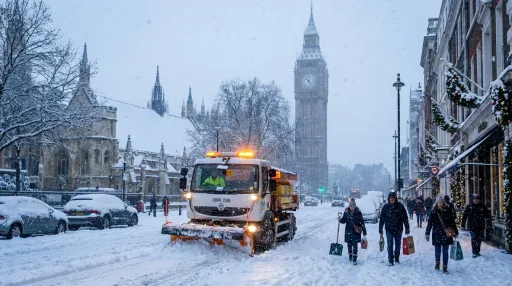
Computer models have been consistent for nearly a week now, which gives forecasters increased confidence. The European Centre for Medium-Range Weather Forecasts shows a strong northerly airflow dragging bitter cold air southwards, whilst moisture from the Atlantic provides fuel for snow development. This isn’t just a brief flurry situation.
What makes this event particularly noteworthy is the potential duration. Some projections suggest snow could persist for 48 to 72 hours across affected regions, with accumulations possibly reaching 10-20cm in lower areas and 30-40cm over higher ground. That level of snowfall would cause widespread disruption right when millions of people are travelling for Christmas.
Why Is There a Real Possibility of a White Christmas in the UK?
White Christmases are statistically rare in Britain despite our reputation for cold weather. The last widespread white Christmas occurred in 2010, though localised snow happened in 2020 and 2021 in Scotland and northern England.
This year’s setup is different because of exceptional atmospheric blocking patterns. A high-pressure system over Scandinavia is preventing milder Atlantic air from reaching us, essentially trapping cold continental air over the British Isles.
Several factors are aligning perfectly for snow:
- Arctic Maritime Airflow: Temperatures at ground level are forecast to drop to -2°C to -6°C across much of the UK, cold enough for snow rather than rain.
- Moisture Availability: The Atlantic low will drag moisture-laden air into the cold zone, creating heavy precipitation that falls as snow rather than rain.
- Timing Coincidence: Peak snowfall is projected for 23rd-25th December, which means Christmas Day itself could see active snowfall across multiple regions.
The Met Office defines a white Christmas as one snowflake being observed falling in the 24 hours of 25th December. By this definition, 2026 has a genuine chance of qualifying, with some regions potentially seeing several centimetres of fresh snow on Christmas morning itself.
Which Areas of the UK Are Most Likely to Be Affected?
Current projections suggest Scotland, Northern Ireland, northern England, and the Midlands face the highest risk of significant snowfall. These regions will be first in line as Arctic air pushes southwards and encounters moisture from the Atlantic system.
Southern England and Wales aren’t guaranteed to escape either. Some models show the snow boundary reaching as far south as London and the South Coast, though confidence decreases the further south you look. Coastal areas might see a mix of rain and sleet rather than pure snow.
Regional Snowfall Risk Explained
Scotland and Northern Ireland should prepare for the most substantial impacts. Glasgow, Edinburgh, Belfast, and surrounding areas could see 15-25cm of snow with drifting in exposed locations. Highland areas might receive considerably more, with some peaks potentially seeing half a metre or more.
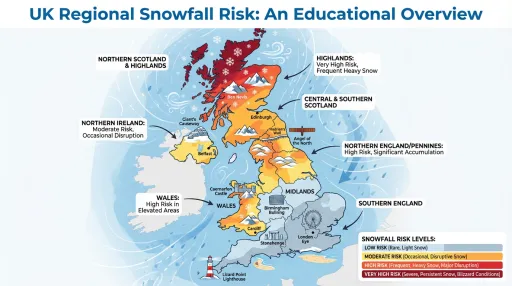
Northern England from Newcastle through to Manchester and Liverpool faces moderate to high risk. Yorkshire, Lancashire, and Cumbria typically perform well with winter weather preparations, but this event could still cause major disruption to Christmas travel plans. The Pennines will act as a snow enhancer, with eastern slopes potentially seeing heavier accumulations than western sides.
How Severe Could This Snowstorm Become?
This storm has the potential to be a significant event, though it’s unlikely to reach the severity of the infamous winters of 1962-63 or 2010. I’d classify it as a moderate to high-impact snowstorm that will cause widespread disruption but shouldn’t be life-threatening for those who take sensible precautions.
The uk braced for significant snowstorm bringing potential white christmas event we’re tracking sits somewhere between a typical winter cold snap and a genuine extreme weather emergency. Wind will be a complicating factor, with gusts of 40-50mph possible in northern areas, creating blizzard conditions and significant drifting.
| Impact Category | Expected Severity | Most Affected Areas |
| Snow Accumulation | 10-40cm depending on location | Scotland, N. Ireland, Northern England |
| Temperature Drop | -2°C to -8°C | Nationwide, coldest in Scotland |
| Wind Speed | 30-50mph gusts | Northern regions, coasts |
| Duration | 48-72 hours | 22nd-26th December |
| Travel Disruption | Severe to extreme | All regions with snow |
The amber and red warning threshold depends on how the forecast evolves over the next few days. The Met Office will issue formal warnings once confidence increases, but I’d expect at least amber warnings for Scotland and possibly northern England. Red warnings remain possible if the most aggressive model solutions verify.
What Meteorological Factors Are Driving This Winter Storm System?
Understanding the science behind this storm helps explain why forecasters are taking it so seriously. This isn’t a random weather event but rather the result of several large-scale atmospheric patterns aligning at exactly the wrong time for Christmas travellers.
The primary driver is a phenomenon called atmospheric blocking, where high-pressure systems become stationary and force weather patterns to divert around them. In our case, a strong high over Scandinavia is acting like a dam, preventing milder Atlantic air from reaching Britain.
The Role of Arctic Air and Jet Stream Positioning
The jet stream has buckled into an unusual pattern that’s funnelling Arctic air directly southwards across the UK. Normally, the jet stream acts as a barrier keeping the coldest air locked over the polar regions, but when it dips south in a deep trough, that protection disappears.
This particular setup has created what meteorologists call a “cold air plunge”. Temperatures in the upper atmosphere have dropped to around -30°C at 5,000 feet, which is exceptionally cold for December. When precipitation falls through air this cold, it has no chance of melting before reaching the ground, guaranteeing snow rather than rain.
Key Atmospheric Ingredients for Heavy Snowfall
Several specific conditions need to align simultaneously for major snow events in the UK. This December, we’re seeing nearly all of them come together, which is relatively rare for our maritime climate.
The critical factors currently in play include:
- Temperature Profile: Ground-level temperatures between -2°C and -6°C with freezing air extending up to at least 3,000 feet, creating a deep cold layer that prevents melting.
- Moisture Source: The Atlantic low-pressure system is drawing moisture northwards from relatively warm ocean waters, providing abundant fuel for heavy precipitation.
- Lift Mechanism: Cold air moving over relatively warmer surfaces creates instability, forcing air upwards and enhancing snow production rates.
- Duration of System: Unlike brief snow showers, this setup looks to persist for 48-72 hours, allowing substantial accumulations to build up gradually.
- Wind Direction: Northerly and north-easterly winds are channelling the coldest continental air across Britain whilst simultaneously driving moisture-laden air into the cold zone.
The combination of these factors is what separates a minor snow event from a potentially disruptive one. I’ve tracked enough UK winters to know that when all these ingredients align, we typically see memorable snow events that cause widespread impacts.
What Disruptions Could the Snowstorm Cause Across the UK?
Transport networks will bear the brunt of this weather system. Christmas is already the busiest travel period of the year, and adding heavy snow creates a perfect storm of demand meeting severely reduced capacity. I’ve seen similar setups before, and they rarely end well for travellers.
Road conditions will deteriorate rapidly once snow begins falling. The Highways Agency and local councils will deploy gritters, but if snow falls heavily and continuously, it becomes impossible to keep surfaces clear. Motorways could see temporary closures, and rural roads might become impassable without four-wheel drive vehicles.
Likely Disruptions to Expect
Rail services typically struggle badly in these conditions. Snow on tracks, frozen points, and power supply issues combine to create cascading delays and cancellations. The West Coast Main Line, East Coast Main Line, and Cross Country routes all face high disruption risk. Passengers should expect journey times to double at best, complete cancellations at worst.
Air travel from major airports like Heathrow, Gatwick, Manchester, and Edinburgh will face delays and cancellations. De-icing procedures are time-consuming, and reduced visibility can prevent aircraft from landing or taking off. Anyone flying between 23rd and 25th December should monitor their flight status obsessively and consider travel insurance.
Schools might close early for Christmas holidays if snow arrives on 23rd December. Many schools finish on or around this date anyway, but severe conditions could prompt early closures on the 22nd. Parents should have contingency childcare plans ready.
Energy networks generally cope well with cold weather, but heavy snow can bring down power lines, especially in rural Scotland and Wales. Isolated outages are possible, though widespread blackouts are unlikely. Heating systems will be working overtime, so check your boiler is functioning properly before the cold arrives.
How Can Households and Travellers Prepare for Heavy Snowfall?
Preparation now could save you serious problems later. I always tell people that the time to prepare for snow is before it arrives, not when you’re already snowed in. The good news is that sensible preparation doesn’t require expensive equipment or specialist knowledge.
For households, focus on the basics. Ensure you have adequate food and water for at least three days. Stock up on batteries, candles, and torches in case of power cuts. Check your heating system is working properly, and bleed radiators if needed. Lag any exposed pipes to prevent freezing and potential bursts. Keep de-icer, a snow shovel, and rock salt or grit handy if you have them.
Travellers face tougher decisions. My honest advice is to avoid unnecessary travel between 22nd and 26th December if possible. If you must travel, do so early on 22nd before conditions deteriorate. Pack an emergency kit for your car including blankets, food, water, a torch, a phone charger, and a shovel. Full tank of fuel is essential, as you might need heating whilst stationary in traffic.
What Is the Met Office Advising Right Now?
The Met Office has issued an early warning statement alerting the public to the increased likelihood of disruptive snow around Christmas. They haven’t yet issued formal yellow, amber, or red warnings, but these will follow once the forecast firms up further. Current guidance urges people to stay informed and make contingency plans.
Their main message centres on flexibility. If you’re travelling for Christmas, consider alternative dates or be prepared for significant delays. Keep checking forecast updates, as confidence will increase day by day. The Met Office website and mobile app provide the most reliable UK-specific forecasts.
| Advisory Type | Current Status | Recommended Action |
| Travel Warnings | Early Alert Issued | Monitor daily, plan alternatives |
| Formal Weather Warnings | Not yet issued | Expected 19th-20th December |
| Public Guidance | Stay Informed | Check Met Office daily updates |
| Local Authority Alerts | Region-dependent | Follow council social media |
Chief Meteorologists at the Met Office emphasise that whilst heavy snow looks increasingly likely, the exact track and intensity remain uncertain. Small shifts in the storm’s path could mean the difference between a white Christmas and a cold but dry one. That uncertainty is frustrating but perfectly normal for forecasts at this range.For broader UK news and weather updates beyond this specific event, check our latest coverage regularly.
Final Verdict — Will the UK Experience a White Christmas in 2026?
Based on current evidence, I believe there’s a strong chance that substantial parts of the UK will see a white Christmas this year. The atmospheric setup is textbook for widespread snow, and computer models have maintained remarkable consistency for days. The uk braced for significant snowstorm bringing potential white christmas headline isn’t media hype—it reflects genuine meteorological patterns that forecasters take seriously.
Scotland, Northern Ireland, and northern England should absolutely prepare for snow around Christmas. Central England has a good chance too. Southern England and Wales sit on the borderline, where small forecast changes could tip conditions from snow to rain or vice versa. Even if Christmas Day itself stays dry in some southern areas, snow could arrive on Boxing Day.
My final thoughts for 2026:
- High confidence in cold weather affecting the entire UK through Christmas
- Moderate to high confidence in significant snow for Scotland, Northern Ireland, and northern England
- Moderate confidence in snow reaching the Midlands and possibly southern England
- High confidence in travel disruption wherever snow falls
- Timing remains uncertain, with snow possible anytime between 22nd and 26th December
- Prepare now rather than waiting until snow is forecast with certainty
Frequently Asked Questions (FAQs)
When exactly will the snowstorm hit the UK?
Current projections suggest snow will begin affecting Scotland and Northern Ireland from late on 22nd December, spreading southwards through 23rd-24th December. Christmas Day itself could see active snowfall across multiple regions.
How much snow is expected to fall?
Scotland and northern England could see 15-30cm in lower areas, with 40cm or more over high ground. Central and southern England might see 5-15cm if the snow reaches that far south, though this remains uncertain.
Should I cancel my Christmas travel plans?
That depends on where you’re travelling and when. If driving long distances on 23rd-25th December through Scotland or northern England, I’d seriously consider rescheduling. Shorter local journeys might be manageable with preparation.
Will trains and flights be cancelled?
Very likely yes, at least partially. Heavy snow typically causes widespread rail cancellations and flight delays. Monitor your service provider’s website and social media channels for real-time updates from 22nd December onwards.
What makes a white Christmas official?
The Met Office defines it as one snowflake observed falling anywhere in the UK during the 24 hours of 25th December. Snow lying on the ground counts too. By this definition, 2026 has strong potential.
How does this compare to the 2010 snow?
The 2010 event lasted longer and affected a wider area, but this 2026 system could produce locally heavier snowfall rates. It’s unlikely to match 2010’s overall severity but could certainly rival it in worst-affected regions.
Are supermarkets likely to run out of food?
Panic buying can create temporary shortages, but supply chains generally cope. Shop sensibly for a few extra days’ worth of essentials, but there’s no need to stockpile excessively.
What should I do if I lose power during the snow?
Stay warm with extra layers and blankets. Use candles safely. Don’t use camping stoves indoors due to carbon monoxide risk. Report power cuts to your distribution network operator, whose number will be on your bill.
Will schools close before Christmas holidays?..
Possible, especially in Scotland and northern England if snow arrives on 22nd-23rd December. Many schools finish around this time anyway, so closures might just mean bringing the end of term forward by a day or two.
Where can I get the most up-to-date weather warnings?
The Met Office website (metoffice.gov.uk) and their mobile app provide the most reliable UK forecasts and warnings. Check daily from now through Christmas for the latest updates as confidence improves.