
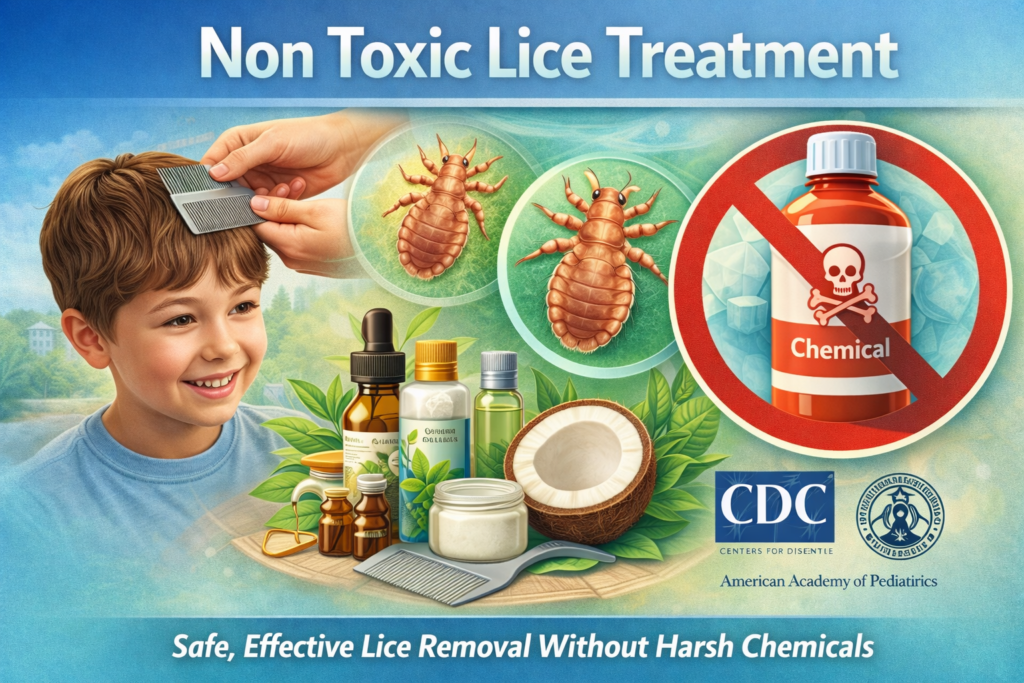
Head lice are a common problem, especially for kids in school, daycare, and group activities. These tiny insects, known as Pediculus humanus capitis, spread easily through close contact. For years, many families turned to strong chemical shampoos to fix the issue fast. But today, more parents and caregivers are stopping to ask if those products are really the best choice.
That is where non-toxic lice treatment comes in. This safer option focuses on removing lice without harsh chemicals that may irritate the scalp or cause health concerns. Groups like the Centers for Disease Control and Prevention (CDC) and the American Academy of Pediatrics now stress careful use of chemical products, especially for children. As awareness grows, non-toxic methods are becoming a trusted alternative for families who want effective care without unnecessary risks.
This article explains when non-toxic lice treatment is the safer alternative to chemical solutions, how it works, and who benefits most from it.
What Defines a Non-Toxic Approach to Lice Removal
Non-toxic lice treatment is designed to remove lice without using pesticides or harsh chemicals. Instead of poisoning the lice, these methods focus on physical removal or suffocation.
Many non-toxic options use tools like fine-tooth combs, natural oils, or heat-based systems. These approaches aim to remove live lice and nits safely while being gentle on the scalp. Because no pesticides are involved, there is less worry about chemical exposure or resistance.
According to guidance from the CDC, lice are not dangerous and do not spread disease. This means treatment does not need to involve aggressive chemicals to be effective.
What Makes a Lice Treatment Non-Toxic
A lice treatment is considered non-toxic when it avoids synthetic insecticides. Traditional chemical treatments often contain ingredients like permethrin or pyrethrin. While approved for use, these chemicals can cause side effects in some people.
Non-toxic treatment focuses on:
- Physical removal of lice and eggs
- Suffocating lice with safe, non-chemical substances
- Avoiding ingredients linked to skin irritation or allergic reactions
This approach aligns with advice from the American Academy of Pediatrics, which recommends using the least toxic option whenever possible, especially for children.
How Non-Chemical Lice Removal Works
Non-chemical lice removal works by breaking the lice life cycle. Instead of killing lice with poison, it removes them from the hair and scalp.
Common methods include:
- Wet combing with a professional-grade lice comb
- Applying safe oils that coat and immobilize lice
- Using controlled heat devices that dehydrate lice and nits
These methods target both live lice and eggs. When done correctly and thoroughly, they can be just as effective as chemical products, without added health concerns.
Common Ingredients Used in Non-Toxic Solutions
Non-toxic lice treatments may use ingredients that are widely considered safe. These can include:
- Dimethicone, a silicone-based oil used in skincare
- Coconut oil or mineral oil
- Essential oil blends used carefully and in low amounts
These ingredients work by blocking the lice’s ability to breathe. Because they do not affect the human nervous system, they are seen as a safer choice for repeated use.
Why Families Are Choosing Non-Toxic Lice Treatment
Many families today are more aware of what goes on their children’s skin. Hair and scalp products are absorbed easily, especially in young kids. This has led to growing concern about repeated chemical exposure.
Such treatments give parents peace of mind. It allows them to address the problem without worrying about harsh side effects or long-term risks.
Concerns About Chemical Exposure in Children
Children have more sensitive skin and developing bodies. Chemical lice treatments may cause:
- Scalp burning or itching
- Redness and rashes
- Eye irritation
- Strong chemical odors that cause discomfort
The American Academy of Pediatrics notes that overuse or misuse of chemical lice products can increase these risks. Non-toxic methods reduce this concern by avoiding insecticides altogether.
Safety for Sensitive Skin and Scalps
Some children and adults have eczema, psoriasis, or naturally sensitive scalps. For them, chemical lice shampoos can make symptoms worse.
Non- chemical lice treatment is often gentler. It does not strip the scalp of natural oils or cause dryness. This makes it a better option for people who already struggle with skin conditions or allergies.
Reducing Health Risks Linked to Traditional Treatments
Another issue with chemical treatments is resistance. Over time, lice can become less affected by certain pesticides. This may lead families to apply products multiple times, increasing exposure.
Non-toxic methods do not rely on chemical action. Because of this, resistance is not a concern. This aligns with public health guidance from the CDC, which warns about pesticide resistance in head lice.
Non-Toxic Lice Treatment for Schools and Childcare Centers
Schools and childcare centers deal with lice cases regularly. Managing outbreaks safely is important for both children and staff.
These lice treatments fit well into group settings where health and safety rules are strict. It helps reduce risk while still addressing the issue effectively.
Safe Lice Control in Group Settings
In schools, many children may be treated at the same time. Using chemical products in these settings can raise concerns about fumes, allergic reactions, or misuse.
Non-chemical lice treatment avoids these problems. It allows for safe, controlled removal without exposing groups of children to chemicals.
Supporting School Health Policies Without Harsh Chemicals
Many school districts follow guidance from organizations like the CDC. These guidelines often stress that children should not be excluded from school simply due to lice.
Non-toxic treatment supports these policies. It focuses on safe management rather than aggressive chemical action, helping children return to class quickly.
Preventing Reinfestation in Classrooms
Non-toxic methods often include education and prevention steps. This may involve:
- Teaching families how to check for lice
- Encouraging regular combing
- Promoting simple hygiene habits
These steps help reduce reinfestation without relying on chemical sprays in classrooms or homes.
Effectiveness of Non-Toxic Lice Treatment Methods
One common question is whether non-toxic lice treatment really works. Research and real-world use show that when done properly, it can be very effective.
The key is thoroughness and follow-up.
Mechanical Removal vs Chemical Treatments
Mechanical removal means physically removing lice and nits from the hair. This method has been used for generations and is still recommended by experts.
The American Academy of Pediatrics supports wet combing as a valid treatment option. When done carefully, it can remove lice without exposing children to chemicals.
Chemical treatments may seem faster, but they often require repeat applications. Non-toxic methods focus on complete removal in fewer sessions.
Addressing Live Lice and Nits Safely
A major benefit of non-toxic lice treatment is that it targets both live lice and eggs. Some chemical shampoos do not kill nits, leading to repeat infestations.
Non-toxic methods focus on:
- Removing every visible nit
- Breaking the lice life cycle
- Reducing the chance of reoccurrence
This careful approach leads to better long-term results.
What to Expect During and After Treatment
lice treatment may take more time than a quick shampoo. However, it is often more thorough.
After treatment, families are usually advised to:
- Check hair regularly
- Continue gentle combing
- Avoid unnecessary product use
This routine helps keep lice away without ongoing chemical exposure.
Who Benefits Most From Non-Toxic Lice Treatment
While non-toxic lice treatment is safe for most people, certain groups benefit even more from this approach.
Children, Toddlers, and Infants
Young children are the most affected by lice. Their skin absorbs products more easily, making chemical exposure a concern.
It is often the preferred choice for toddlers and infants. It avoids ingredients that may not be suitable for very young ages.
Individuals With Allergies or Asthma
People with asthma or allergies may react strongly to chemical fumes or scents. Traditional lice shampoos can trigger breathing issues or allergic reactions.
Non-toxic methods are usually odor-free or lightly scented. This makes them safer for individuals with respiratory sensitivities.
Families Seeking Eco-Conscious Healthcare Options
Many families today prefer eco-friendly solutions. Chemical lice treatments can enter water systems when rinsed out.
Such lice treatment aligns with environmentally conscious values. It reduces chemical waste while still solving the problem.
Aftercare and Prevention Using Non-Toxic Methods
Treatment is only part of the solution. It is equally crucial to stop lice from returning.
Non-toxic lice care often includes simple, practical prevention steps that fit into daily life.
Lice Prevention Without Chemical Sprays
Chemical sprays for furniture and bedding are often unnecessary. The CDC states that lice do not survive long off the human head.
Non-toxic prevention focuses on:
- Washing bedding in hot water
- Avoiding head-to-head contact
- Not sharing hats or hair tools
These steps are effective and safe.
Maintaining a Lice-Free Home Safely
A lice-free home does not require harsh cleaning products. Vacuuming and regular laundry are usually enough.
Non-toxic approaches reduce stress and make prevention easier for busy families.
Education and Routine Scalp Checks
Education is a powerful tool. Teaching children not to share personal items and showing parents how to check for lice helps catch issues early.
Routine scalp checks using a fine-tooth comb can prevent small problems from becoming big ones.
Conclusion: Why Non-Toxic Lice Treatment Is the Smarter Choice
Non-toxic lice treatment is becoming the safer alternative to chemical solutions for a good reason. It offers effective lice removal without exposing children and families to unnecessary risks. Backed by guidance from trusted organizations like the Centers for Disease Control and Prevention (CDC) and the American Academy of Pediatrics, non-toxic methods focus on safety, thoroughness, and long-term results.
By avoiding harsh chemicals, these treatments protect sensitive scalps, reduce health concerns, and support modern family values. Whether used at home, in schools, or in childcare settings, non-toxic lice treatment provides a balanced approach that puts health first.
For families looking for peace of mind and reliable results, choosing a non-toxic solution is not just an option. It is a smart and responsible step forward.